Together, we solve the challenges of tomorrow.
LEARN MORE →In Abbotsford, the term Slopes & Walls covers the full spectrum of geotechnical engineering required to stabilize natural and constructed earth structures. This category brings together investigation, analysis, design, and construction oversight for both soil and rock slopes, as well as all types of retaining structures. The goal is straightforward: prevent landslides, erosion, and wall failures that can threaten public safety, private property, and critical infrastructure. Given the city's mix of steep terrain, high seasonal rainfall, and ongoing development pressure, these services are not optional extras — they are essential components of virtually every hillside project, road widening, or commercial excavation.
Abbotsford's geology presents a particular set of challenges that make professional slope and wall engineering especially important. Much of the city is underlain by glacial till, advance outwash deposits, and glaciolacustrine silts and clays that were laid down during the Fraser Glaciation. These soils can be highly variable over short distances, with layers of dense till sitting above softer, more compressible materials. The Sumas Mountain area and the slopes rising from the Matsqui Prairie are prone to shallow landslides and debris flows, especially during the intense rain events of late autumn and winter. Understanding local groundwater conditions, soil stratigraphy, and the history of slope movement is fundamental to any successful design, which is why a thorough slope stability analysis is typically the first technical step in any project involving cuts, fills, or natural terrain.
Regulatory compliance in British Columbia is governed by a framework that directly affects how slopes and walls are designed in Abbotsford. The BC Building Code references the Canadian Foundation Engineering Manual and geotechnical design must follow the limit states design philosophy outlined in the National Building Code of Canada. For slopes, the Ministry of Forests' Terrain Stability Field Guidelines and the Engineers and Geoscientists BC professional practice guidelines on landslide assessments provide the standard of care. Retaining walls that support more than 1.2 meters of unbalanced fill, or that are adjacent to property lines or rights-of-way, typically require professional engineering design sealed by a registered professional engineer. The City of Abbotsford's own Development Engineering Design Criteria and Subdivision and Development Bylaw also impose specific requirements for geotechnical reports, retaining wall height limitations, and drainage provisions that must be addressed in any submission.
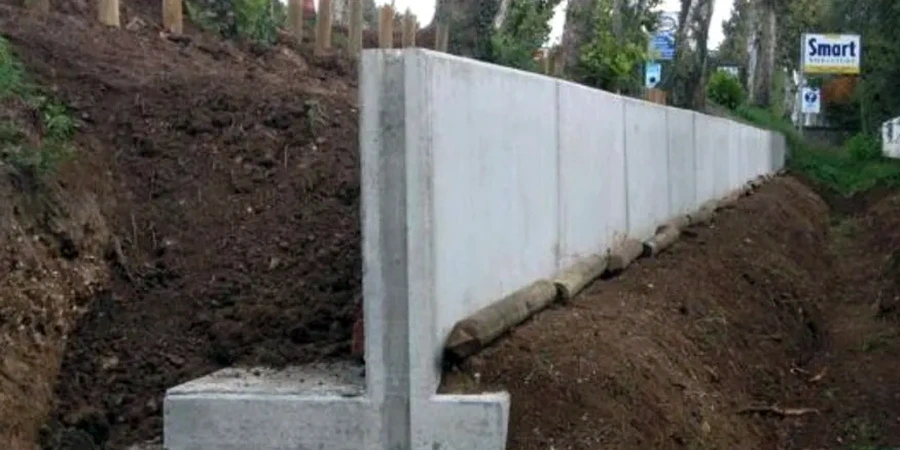
The types of projects that demand these services are diverse. Single-family home construction on sloping lots in areas like Eagle Mountain or Auguston routinely requires engineered cut-and-fill plans and retaining structures. Agricultural operations on the Sumas Prairie often need bank stabilization along creeks and drainage channels to prevent loss of productive land. Municipal infrastructure projects, such as the widening of Gladwin Road or improvements to the Trans-Canada Highway corridor, involve deep excavations and permanent retaining structures that must perform reliably for decades. In many of these cases, active and passive anchor systems become the solution of choice when space is tight or when conventional gravity walls are impractical. For commercial and multi-family developments, retaining wall design must integrate with architectural vision while meeting stringent structural and geotechnical performance criteria, often resulting in complex reinforced concrete cantilever walls, mechanically stabilized earth walls, or soil nail walls.
A slope stability analysis is generally required when proposed development is within 30 metres of a slope crest or toe, or when the slope gradient exceeds 30 percent. The City of Abbotsford's geotechnical review process, guided by the BC Building Code and EGBC professional practice guidelines, typically triggers this requirement during subdivision, building permit, or development permit applications on hillside properties.
Active anchors are post-tensioned to apply a predetermined load to the retained soil or rock, actively compressing the ground and controlling wall movement from the start. Passive anchors, such as soil nails or rock dowels, develop their resistance only as the ground deforms and loads the anchor. The choice depends on tolerable movement, soil conditions, and project constraints.
The most suitable retaining wall type depends on site-specific geotechnical conditions, but in Abbotsford's glacial till and variable soils, reinforced concrete cantilever walls, mechanically stabilized earth walls, and gravity walls are common. For steep slopes or limited access, soil nail walls or anchored soldier pile walls often provide effective solutions while minimizing excavation.
Abbotsford receives significant rainfall, particularly from October through March, which can elevate groundwater levels and reduce soil shear strength. Proper surface drainage, subsurface drainage systems, and waterproofing details are critical for long-term performance. Without adequate drainage design, even well-constructed walls and slopes can experience hydrostatic pressure buildup, leading to instability or structural distress.