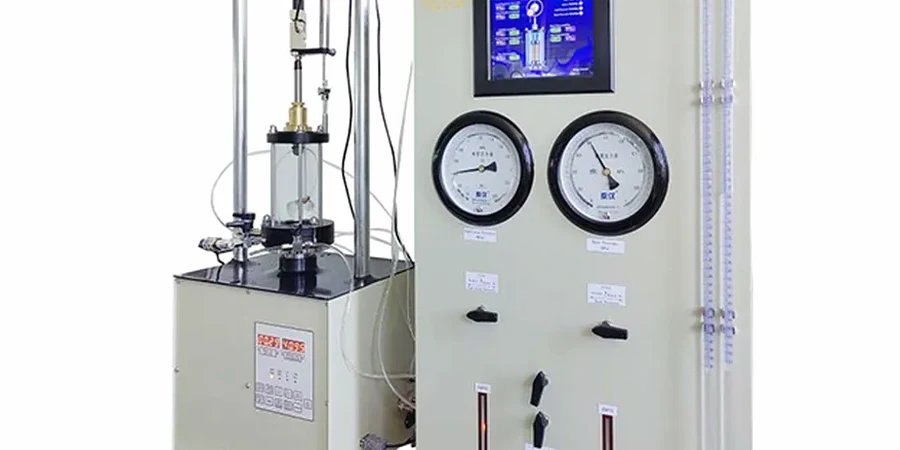
Geotechnical laboratory testing forms the analytical backbone of every safe and economical construction project in Abbotsford. This category encompasses a suite of standardized physical and mechanical tests performed on soil and rock samples recovered from boreholes, test pits, or surface exposures. By quantifying parameters such as particle size distribution, plasticity, shear strength, and compressibility, the laboratory converts raw field samples into reliable engineering data. In a city that stretches from the fertile alluvial plains of the Fraser River up to the glacial uplands of Sumas Mountain, understanding subsurface variability through precise lab work is not optional; it is essential for managing risk on everything from residential foundations to major highway interchanges.
Abbotsford’s surficial geology is dominated by thick sequences of glacially consolidated sediments, including lodgement tills, glaciomarine clays, and post‑glacial alluvial silts and sands. These deposits are often heterogeneous over short distances, and many of the fine‑grained units contain sensitive clay minerals that can lose strength dramatically when disturbed. A standard field classification alone cannot reliably detect these hazards. A comprehensive laboratory program, beginning with a grain size analysis (sieve + hydrometer), provides the fundamental breakdown of sand, silt, and clay fractions that governs drainage, frost susceptibility, and liquefaction potential. For fine‑grained soils, Atterberg limits testing establishes the moisture contents at which the material transitions from plastic to liquid behaviour, directly informing foundation design and slope stability assessments in areas like the Clayburn Creek corridor.
All testing in Abbotsford must comply with nationally recognized standards, primarily those published by the Canadian Standards Association (CSA) and ASTM International. Key protocols include ASTM D422 for particle‑size analysis, ASTM D4318 for liquid and plastic limits, and ASTM D2850 or D4767 for triaxial compression. These standards are explicitly referenced in the BC Building Code and in municipal development permit requirements enforced by the City of Abbotsford. Engineers relying on laboratory data for geotechnical reports must ensure that testing is performed by CCIL‑certified technicians, as this certification is a common condition for acceptance by local approving authorities. Without this rigorous chain of custody and compliance, critical design parameters may be rejected during the building permit review.
The range of projects that demand a thorough laboratory investigation is broad. Deep‑seated slope stability analyses along the escarpments of Sumas Mountain require effective stress shear strength parameters from consolidated‑undrained triaxial test programs. Large‑footprint commercial developments on the Sumas Prairie need consolidation and swell‑potential data to design floors and pavements that will not heave or crack under seasonal moisture fluctuations. Even municipal infrastructure, such as the expansion of the Abbotsford‑Mission Wastewater Treatment Plant or the widening of Highway 1, depends on laboratory‑derived compaction characteristics and hydraulic conductivity values to specify appropriate borrow materials and predict settlement. In each case, the laboratory transforms a conceptual ground model into a quantifiable set of engineering properties that directly inform the final design.
Most single‑family home permits in Abbotsford require particle size analysis (sieve and hydrometer) to classify the soil and Atterberg limits if fine‑grained material is present. These tests help determine bearing capacity, frost protection depth, and potential for shrink‑swell behaviour. The City often requests a sealed geotechnical report referencing ASTM or CSA standard test results before issuing foundation permits, especially in areas with known sensitive clay or high water tables.
The Fraser Valley’s post‑glacial silts and clays often contain sensitive, high‑plasticity layers that can lose strength when remolded. Standard field logging may miss these features, so laboratory testing becomes essential. Atterberg limits and triaxial shear tests help identify these sensitive zones, while grain size analysis informs drainage and liquefaction assessments. Without lab data, designs risk underestimating settlement or slope instability in Abbotsford’s variable glacial deposits.
Laboratories must follow ASTM standards such as D422 for grain size, D4318 for Atterberg limits, and D2850 or D4767 for triaxial testing. The BC Building Code references these standards, and the City of Abbotsford typically requires testing by technicians certified under the CCIL (Canadian Council of Independent Laboratories) program. This ensures traceable quality control and compliance with provincial engineering practice guidelines.
Sieve analysis separates coarse particles (gravel and sand) using a stack of wire mesh sieves, while hydrometer analysis measures the settlement rate of fine particles (silt and clay) in a fluid column. Both are required when a soil contains a mix of coarse and fine fractions, which is common in Abbotsford’s glacial tills and alluvial deposits. The combined result provides a complete grain size distribution curve essential for classification and predicting engineering behaviour.