Seismic engineering in Abbotsford is not merely an academic exercise—it is a critical component of responsible construction and urban planning in one of British Columbia's most seismically active regions. This category encompasses the full spectrum of geotechnical and structural strategies used to assess, mitigate, and design against earthquake forces. From evaluating ground behavior to engineering structural systems that can withstand significant shaking, seismic services protect both lives and investments. In Abbotsford, where the built environment continues to expand into areas with complex soil profiles, integrating seismic considerations from the earliest planning stages is essential for long-term resilience.
The local geology of the Fraser Valley directly shapes the seismic hazards Abbotsford faces. Much of the city sits on thick deposits of glacial and post-glacial sediments, including silts, sands, and clays laid down by the Fraser River and its ancestral channels. These loose, water-saturated soils are particularly susceptible to phenomena like amplification of ground motion and, more critically, soil liquefaction. Understanding these subsurface conditions is the first step in any seismic design process, which is why detailed site characterization forms the backbone of our approach. A thorough soil liquefaction analysis is often the first specialized investigation required, especially for projects near watercourses or on the Sumas Prairie.
Regulatory compliance in Abbotsford is governed primarily by the British Columbia Building Code (BCBC), which adopts the National Building Code of Canada (NBC) with provincial amendments. The 2024 BCBC mandates seismic design in accordance with Part 4, referencing site-specific seismic hazard values from Natural Resources Canada's seismic hazard model. For critical facilities and high-occupancy buildings, a rigorous geotechnical investigation is not optional—it is a statutory requirement. These codes demand a clear understanding of Site Class, which can range from firm ground (Class C) to liquefiable profiles (Class F), directly influencing design loads. Furthermore, municipalities like Abbotsford often require a seismic microzonation study for large-scale developments or when updating official community plans to ensure zoning decisions reflect actual ground-shaking risks.
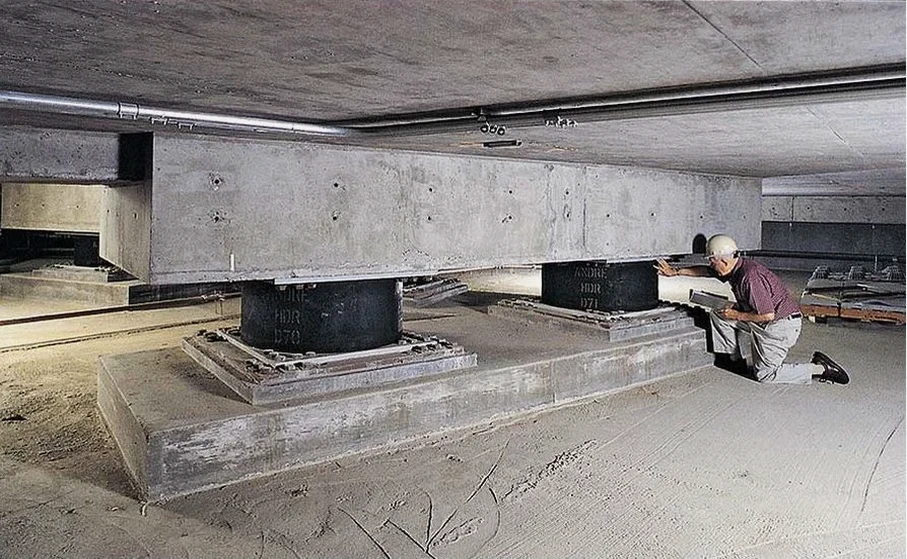
The types of projects that demand comprehensive seismic services are diverse. Institutional buildings such as schools and hospitals, designated as post-disaster structures, require performance-based design to remain operational after a major earthquake. Industrial facilities with sensitive equipment or hazardous materials must prevent cascading failures. Even residential and commercial developments, particularly multi-story or podium-style constructions on marginal soils, benefit significantly from advanced analysis. For structures where conventional fixed-base design is insufficient, base isolation seismic design offers a proven method to decouple the building from ground motion, drastically reducing structural demands and interior damage. Whether it is a new bridge abutment, a high-rise tower, or the retrofit of a heritage building, a tailored seismic strategy ensures safety and code compliance.
A standard geotechnical investigation focuses on bearing capacity, settlement, and slope stability for static loads. A seismic-specific study explicitly evaluates dynamic ground response, including site class determination, liquefaction potential, and seismic hazard parameters. It provides the peak ground acceleration and spectral values required for structural design under the BC Building Code, which a conventional report often does not address.
A site-specific analysis is required for structures on Site Class F soils, such as liquefiable sands or sensitive clays, which are common in Abbotsford. It is also mandatory for all post-disaster buildings, including hospitals and fire halls, and for any structure where the design engineer determines that the default code values do not adequately represent the local ground amplification or failure risks.
Seismic microzonation divides the city into zones based on relative ground-shaking hazard, liquefaction susceptibility, and landslide potential. For planners and developers, this provides a macro-level tool to guide land-use decisions, prioritize retrofit programs, and establish development permit conditions before individual site investigations begin, leading to more efficient and safer urban expansion.
Yes, base isolation is a highly effective retrofit strategy, particularly for heritage structures or essential facilities where conventional strengthening would be invasive or insufficient. It involves installing flexible bearings at the foundation level to decouple the structure from ground motion. While complex, it allows continued building occupancy during construction and can achieve a higher performance level than fixed-base retrofits.