← Home · Foundations

Shallow Foundation Design in Abbotsford: Bearing Capacity & Settlement Control

Together, we solve the challenges of tomorrow.

LEARN MORE →

A common mistake in Abbotsford is treating the entire site as uniform gravel, only to hit compressible Sumas clay at 2 meters during excavation. That discovery stops the job and triggers a redesign. Shallow foundation design here must account for the abrupt transition between the upland glacial tills and the lowland post-glacial lacustrine deposits that define the Fraser Valley. Our approach starts with a site-specific geotechnical model, not a generic bearing capacity table. We correlate field data from test pits in accessible areas with SPT drilling where refusal depths exceed 4.5 meters, ensuring the foundation subgrade is characterized across the entire building footprint before a single dimension is calculated.

Bearing capacity without settlement analysis is half a design. In Abbotsford clay, settlement governs footing size every time.
Process and scope

The contrast between a site on Sumas Mountain and one on the Matsqui flats is extreme. The mountain slope delivers dense till with N-values above 30; a 600 mm strip footing can work comfortably. The flats present soft to firm silty clay with N-values of 4 to 8, where even a 1.2 m wide footing may settle beyond the 25 mm limit unless the bearing stratum is improved or the load is spread differently. Our shallow foundation design integrates these local stratigraphic realities. We run consolidation tests on Shelby tube samples to quantify settlement under sustained load, and cross-check results with in-situ permeability data where groundwater affects effective stress. The output is a set of footing widths, embedment depths, and reinforcement schedules matched to the actual soil profile, not an assumed one.
Shallow Foundation Design in Abbotsford: Bearing Capacity & Settlement Control
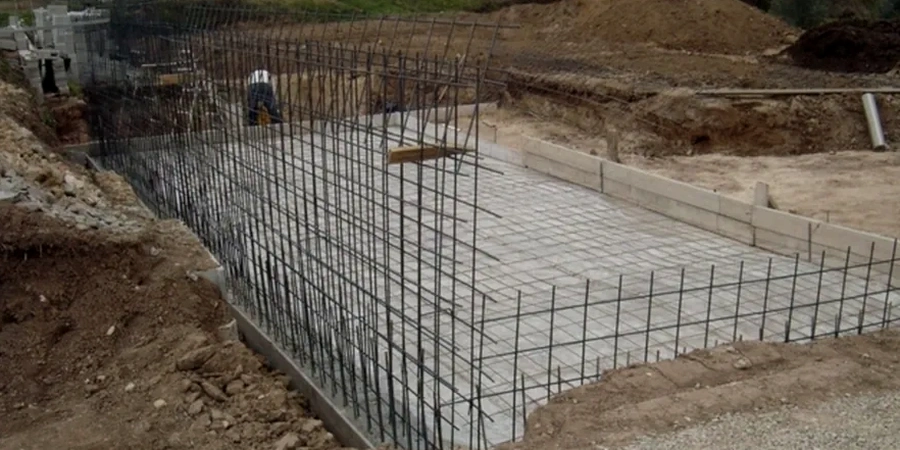
Technical reference image — Abbotsford

Local ground factors

On the Matsqui flats, we often see old farm drainage tiles that were abandoned decades ago. If a footing is placed near a collapsed tile line, localized softening and differential settlement can occur within the first wet season. Nobody maps these features; they are found only by careful site reconnaissance and targeted test pits. The second risk is liquefaction-induced bearing loss in loose alluvial sands below the clay crust. A 2020 site on Riverside Road showed a factor of safety below 1.1 for a magnitude 6.5 scenario. The solution shifted the foundation from isolated footings to a stiffened slab-on-grade with perimeter beams, reducing post-liquefaction differential movement. Ignoring the deep loose layer would have produced a textbook bearing capacity failure.

Need a geotechnical assessment?

Reply within 24h.

Email: contact@geotechnicalengineering.xyz

Reference parameters

ParameterTypical value
Bearing stratumGlacial till (Sumas upland) or medium-dense alluvium
Typical footing embedment (frost)Minimum 0.6 m per NBCC for Fraser Valley
Allowable bearing pressure (till)150–300 kPa (site-specific verification)
Allowable bearing pressure (clay)75–100 kPa; settlement-controlled
Total settlement limit25 mm for conventional framed structures
Differential settlement limitL/500, per NBCC commentary
Seismic design categorySite Class C or D per NBCC 2020, confirmed by MASW

Complementary services

01

Bearing capacity and settlement analysis

Combines SPT N-values, lab consolidation data, and footing geometry to calculate allowable bearing pressure and predict both total and differential settlement under service loads.

02

Ground improvement for shallow foundations

When natural bearing capacity is insufficient, we design compacted granular pads or soil-cement stabilization layers directly beneath footings to increase stiffness and reduce settlement.

03

Construction inspection and proof rolling

Subgrade verification during excavation. We log the exposed bearing surface, perform dynamic cone penetration tests at footing level, and confirm the design assumptions before concrete is placed.

Regulatory framework

NBCC 2020 — Division B, Part 4, CSA A23.3:19 — Design of concrete structures, ASTM D1194 / D1195 — Plate load test (field verification)

Common questions

What is the typical cost for a shallow foundation design for a single-family home in Abbotsford?

For a standard residential lot in Abbotsford, the shallow foundation design service typically ranges from CA$2.900 to CA$4.180. The final figure depends on the number of borings or test pits required and whether consolidation testing is needed for clay sites.

How deep do footings need to be in Abbotsford to meet frost protection requirements?

The NBCC prescribes a minimum footing depth of 0.6 m in the Fraser Valley. However, on sites with organic topsoil or fill, we frequently specify 0.9 to 1.2 m to reach competent native soil and avoid frost heave in silty materials.

Can you design a shallow foundation if the site has a high water table?

Yes. A high water table reduces effective stress, so we adjust the bearing capacity calculation using submerged unit weights. We also check for buoyancy effects on slabs and recommend perimeter drainage and granular fill to keep the footing base dry during construction and service.

Location and service area

We serve projects in Abbotsford and surrounding areas.

View larger map